

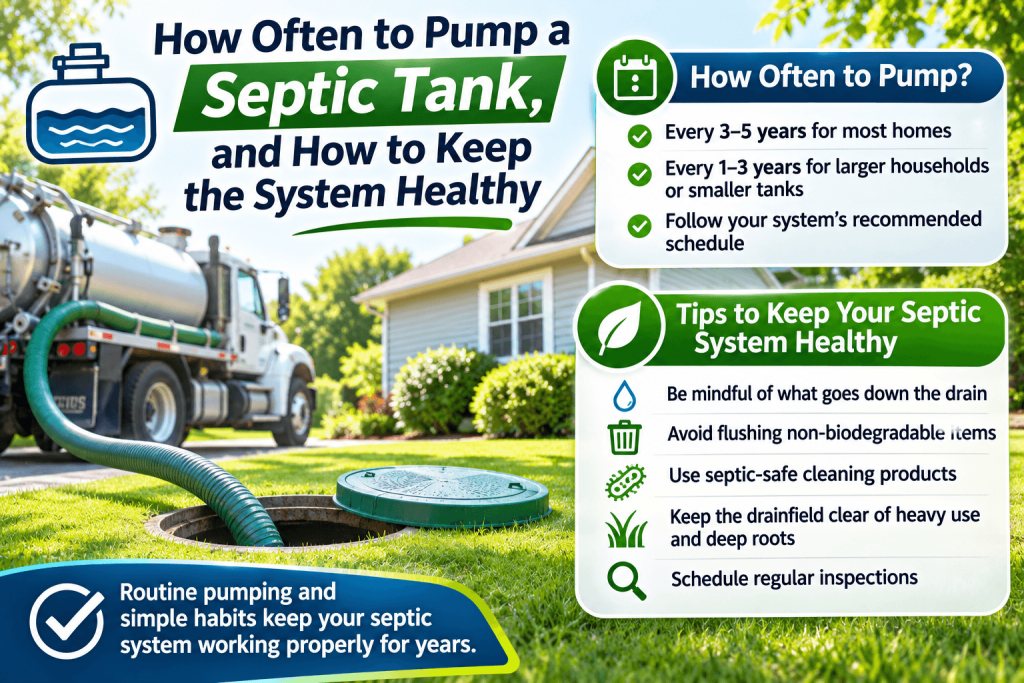
How Often to Pump a Septic Tank, and How to Keep the System Healthy
The U.S. Environmental Protection Agency suggests having a household septic system inspected at least every three years, with tanks typically pumped every three to five years. The right schedule depends on tank size, household size, and water use, so an inspection is the best way to set yours.
Skipping maintenance can lead to backups, soggy yards, and expensive drainfield repairs. Here is how to stay ahead of problems.
Step 1: Know Your System
Find your septic tank’s location, size, and the date of the last pumping. Many counties keep permit records with system details. Draw a simple map showing the tank, lid locations, and drainfield so you can avoid parking or building on them.
Ask your septic provider to measure the sludge and scum layers at each visit. These measurements help set an accurate pumping schedule instead of guessing.
Step 2: Watch for Warning Signs
- Slow drains or gurgling sounds throughout the house.
- Sewage odors near the tank, drainfield, or inside.
- Wet, spongy ground or unusually green grass over the drainfield.
- Sewage backing up into the lowest drains.
Call a septic professional promptly if you notice these signs. Waiting can turn a pumping visit into a drainfield repair.
What Pumping and Inspection Cost Depends On
Pumping prices usually depend on tank size, how easy the lids are to reach, travel distance, and whether the tank needs extra work, such as cleaning effluent filters or replacing baffles. Digging to expose buried lids can add cost, so many homeowners install risers that bring lids closer to the surface.
Ask for a written report after each visit, including sludge levels and the condition of baffles and filters. Keep these reports with your home records; they help when selling the property.
Pumping companies often book up in spring, so schedule service early in the year.
Step 3: Protect the System Daily
Spread laundry loads through the week, fix leaky fixtures, and avoid pouring grease, wipes, or harsh chemicals down drains. Keep cars and heavy equipment off the drainfield, and plant only grass over it, since tree roots can damage pipes. The EPA’s SepticSmart program offers more homeowner tips.
For pumping and inspection, compare septic service companies on Elibtory and ask whether they check baffles and filters and provide a written report. When comparing providers, ask whether they inspect baffles and filters during pumping and provide a written report.
Regular Care Prevents Costly Surprises
Most septic systems need inspection about every three years and pumping every three to five years, adjusted for household size and water use. Know your system’s layout, watch for warning signs, protect the drainfield, and use Elibtory to find septic professionals who provide written inspection reports.
Frequently Asked Questions
The most reliable way is a professional inspection that measures sludge and scum levels. Warning signs like slow drains, odors, or wet spots over the drainfield may mean you are overdue. Many households pump every three to five years. Keep records of every service visit.
Septic additives are not a substitute for regular pumping, and some can harm the system. The EPA notes that a properly used system typically does not need additives. Focus on routine inspections, pumping, and avoiding harmful materials in drains. Regular pumping remains the reliable choice.
Avoid flushing wipes, feminine products, paper towels, grease, cooking oil, medications, paint, and harsh chemicals. These can clog pipes or disrupt the bacteria that break down waste. Use the trash for anything other than human waste and toilet paper. When in doubt, throw it out.
No. Weight from vehicles, structures, or heavy equipment can compact soil and crush pipes, causing the drainfield to fail. Keep the area clear, plant grass only, and direct roof and surface water away from the drainfield. Divert gutters away from the drainfield too.